
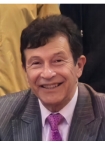
Prof. Adrian Ioinovici
IEEE Life Fellow
Shanghai University of Electric Power, China
Bio: Adrian Ioinovici, IEEE Fellow, is the Director of the Power Electronics based on Switched Capacitors (PESC) Center, the Shanghai University of Electrical Power, China, within the "one thousand foreign experts plan", and holds honorary professorships from many universities. He got the IEEE Fellow grade for "pioneering work in switched-capacitor converters" and served as Associate Editor for many IEEE Transactions. He is the Founding Editor-in-Chief and present EiC of International Journal of Power Electronics and Applications. He authorized the books Computer-Aided Analysis of Active Circuits (New York: Marcel Dekker, 1990) and Power Electronics and Energy Conversion Systems, Volume 1: Fundamentals and Hard-switching Converters (Wiley, 2013). His main research interests are switching-capacitor converters and inverters, large dc gain converters, soft-switching converters. He published over 200 papers in IEEE Transactions and conferences.
Title:Switched-Capacitor-Based Inverters for Grids Supplied by Green Energy
Abstract: The theory of energy conversion through a switched-capacitor circuit will be revised. The requirements imposed on the inverters when used in grids supplied by renewable energy cells will be discussed versus the possibilities offered by the switched-capacitors. An introduction to the classical multilevel switched capacitor inverters (SCMLI) will be followed by a detailed discussion of the SCMLIs specifically developed to answer the requirements of the green sources of energy. The speech will end by pointing out the trade-offs that have to be done in the development of these inverters, and a way forward in their research to match better the constraints imposed by the green energy cells and by the grid.

Prof. Wei Xu
IEEE Fellow
Institute of Electrical Engineering, Chinese Academy of Sciences, China
Bio: Wei Xu (Fellow, IEEE) received the double B.E. and M.E. degrees from Tianjin University, Tianjin, China, in 2002 and 2005, respectively, and the Ph.D. degree from the Institute of Electrical Engineering, Chinese Academy of Sciences (IEECAS), Beijing, China, in 2008, all in electrical engineering. His research topics mainly focus on the design and control of linear machines and drives. From 2008 to 2012, he was a Post-Doctoral Fellow with the University of Technology Sydney, Ultimo, NSW, Australia, the Vice-Chancellor Research Fellow with the Royal Melbourne Institute of Technology, Melbourne, VIC, Australia, and a Japan Science Promotion Society Invitation Fellow with Meiji University, Tokyo, Japan, respectively. From 2013 to 2023, he was a Professor with the Huazhong University of Science and Technology, Wuhan, China. Since 2024, he has been a Professor with IEECAS and Director for State Key Laboratory. Dr. Xu is an IEEE Fellow and an IET Fellow for the contribution to design and control for linear machines and drive systems. He was the General Chair of 2021 International Symposium on Linear Drives for Industry Applications and 2023 IEEE International Conference on Predictive Control of Electrical Drives and Power Electronics. He is an Associate Editor of over ten peer-reviewed IEEE JOURNALS, including IEEE TRANSACTIONS ON INDUSTRIAL ELECTRONICS and IEEE TRANSACTIONS ON POWER ELECTRONICS.
Title: Efficiency Improvement on Linear Induction Machine and Drive System
Abstract: Linear induction machines (LIMs) have found more and more applications due to some advantages of direct drive with smaller volume, stronger acceleration/deceleration, lower maintenance and noise, etc. compared to rotary induction machines (RIMs). Firstly, main differences between LIMs and RIMs will be highlighted, focusing on the aspects end effects in details. Design criteria of LIMs will be specifically exposed, emphasizing the main differences with the classic rotating induction motor design, caused by the presence of end effects, large air-gaps, half-filled slots, high leakage inductances, etc. Afterwards, in order to improve the working efficiency, it will share advancements in the accurate modelling, loss minimization control strategy, multi-objective optimization technique, etc. for LIMs and drives.
Researchers and engineers from electrical, mechanical and information fields may find this lecture very useful when dealing with transportation motor and drive related design, control, system integration, which can be extended to other industrial applications.
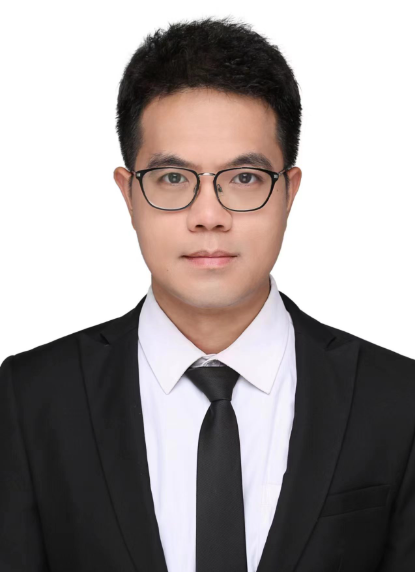
Prof. Yiming Zhang
Fuzhou University, China
Bio: Professor Yiming Zhang is the recipient of the National Youth Talent Program, “Minjiang” Scholar of Fujian Province, a full professor and Ph.D supervisor of Fuzhou University, and IEEE Senior Member. He was recognized as the World’s Top 2% Scientist by Elsevier. His research interest is power electronics and wireless power transfer. He has authored one book from Springer and published more than 200 technical papers in renowned journals and conference proceedings. He has an H-index of 46 and has won multiple excellent conference papers including ECCE, EVS, EVCP, and CIEEC. He was recognized as the Outstanding Reviewer for EEE TPEL and TIE. He is the PI of the Excellent Youth Project and Youth Fund from National Natural Science Foundation of China, the Outstanding Youth Project of Fujian Provincial Natural Science Foundation.
Title: Wireless Power Transfer and its Application on Electric Vehicle Wireless Charging
Abstract: Wireless power transfer (WPT) is the transmission of power from the source to the load without direct electrical contact. This history of WPT dates back to Nikola Tesla with his advanced ideas. The category and basic theories of WPT are presented. The typical applications of WPT, including consumer electronics, electric vehicles, and rail transmit, are investigated. The key issues concerning electric vehicle wireless charging, including magnetic coupler design, compensation network, control, and foreign object detection, are investigated.
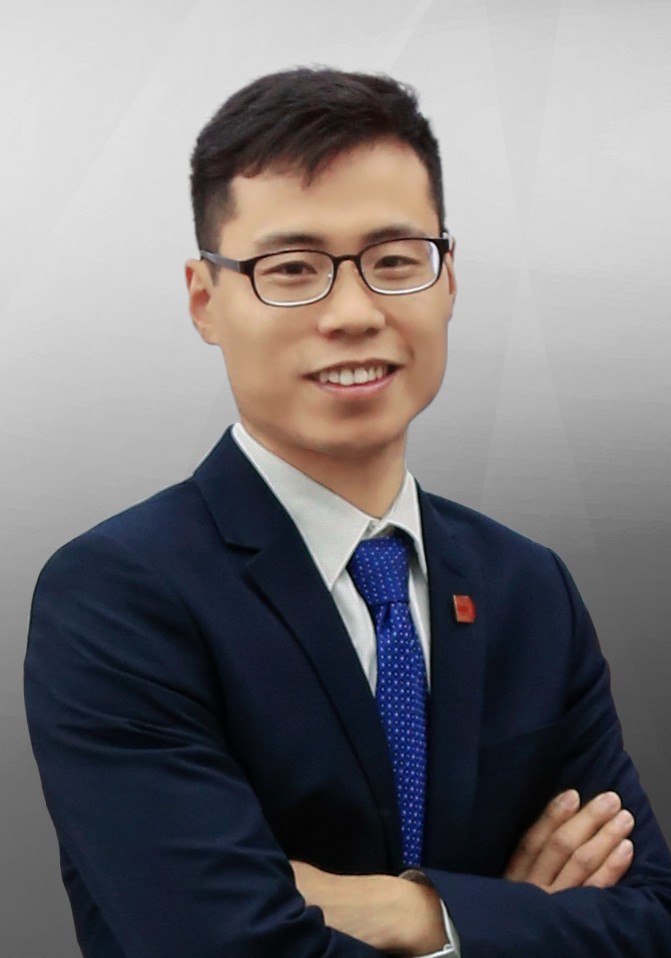
Assoc. Prof. Tao Ma
Shanghai Jiao Tong University, China
Bio: Dr Tao Ma received his PhD from the Hong Kong Polytechnic University in 2015 and now he is an Associate Professor at Shanghai Jiao Tong University. His research is mainly related to fundamental research and applications of solar photovoltaic technology. He has acted as a Principal Investigator of 18 research projects from MOST, NSFC etc, and he has published over 150 papers in high-impact international journals with a total citation of 13,000 and h-index of 63, including 15 ESI highly cited papers and 2 ESI hot papers. Dr. Ma has received a number of awards, such as ‘Clarivate Highly Cited Researchers 2025', 'Most Cited Chinese Researcher by Elsevier', 'World's Top 2% most-cited Scientists', 'Highly Ranked Scholar (Top 0.05%) in Photovoltaic & Energy', 'Excellent Young Scientist Award in Energy and Built Environment', 'Outstanding PhD Thesis Award' etc.. He currently serves as the editorial board member of several journals including 'Applied Energy (IF: 10.1)' and 'Solar Energy Materials & Solar Cells (IF: 6.3)'.
Title: High-Efficiency Colored and semi-transparent Photovoltaics for Buildings Integration
Abstract:Building-integrated photovoltaic (BIPV) technology is essential for developing zero-energy buildings and carbon-neutral cities. However, much effort is still required to make photovoltaic (PV) panels aesthetically pleasing. In this presentation, I will share some progress from our lab on developing colored PVs with high power conversion efficiencies (PCEs) and mass producibility. This work is based on technologies such as self-assembled photonic glass and dielectric multilayer thin films, and we have been able to create solar cells in various colors, with less than a 5% reduction in PCE compared to standard cells, through spray coating microspheres of different diameters and optimally designing film stacks. Using these methods, we also achieved high-efficiency PV modules with various colors and patterns, reaching PCEs of up to 21%. A demonstraion project was setup in the campus of SJTU for validating this technology and long-term performance evalutaion. This research lays the foundation and provides motivation for the future development of colored PVs for integration into sustainable buildings and cities.